A curbless shower design is one of the most requested upgrades in Canadian bathroom renovations right now, and for good reason: removing the raised threshold makes a small bathroom feel larger, wipes out a common trip hazard, and gives the whole room a clean, continuous look. The piece of hardware that makes it all possible is the linear drain. Swapping a traditional centre point drain for a single-channel linear drain lets the floor slope in just one direction, which is what allows tile to run straight from the bathroom into the shower without an awkward step or a fussy four-way pitch.
Why a linear drain makes curbless showers possible
A standard round drain sits in the middle of the shower floor, so the tile has to slope toward it from four sides. That multi-directional pitch is fiddly to build and usually forces you into small mosaic tiles that can bend around the curve. A linear drain collects water along one long channel instead, so the floor only needs a single, gentle slope, typically about a quarter inch per foot, running toward the drain.
That one change unlocks the modern look most homeowners are after. You can lay large-format tile or a continuous flooring surface right through the shower entrance, keep the grout lines aligned with the rest of the room, and skip the curb entirely. The result is a barrier-free wet area that reads as one uninterrupted floor.
Where to place the drain
Linear drains give you real flexibility on placement, and each option changes the feel of the space:
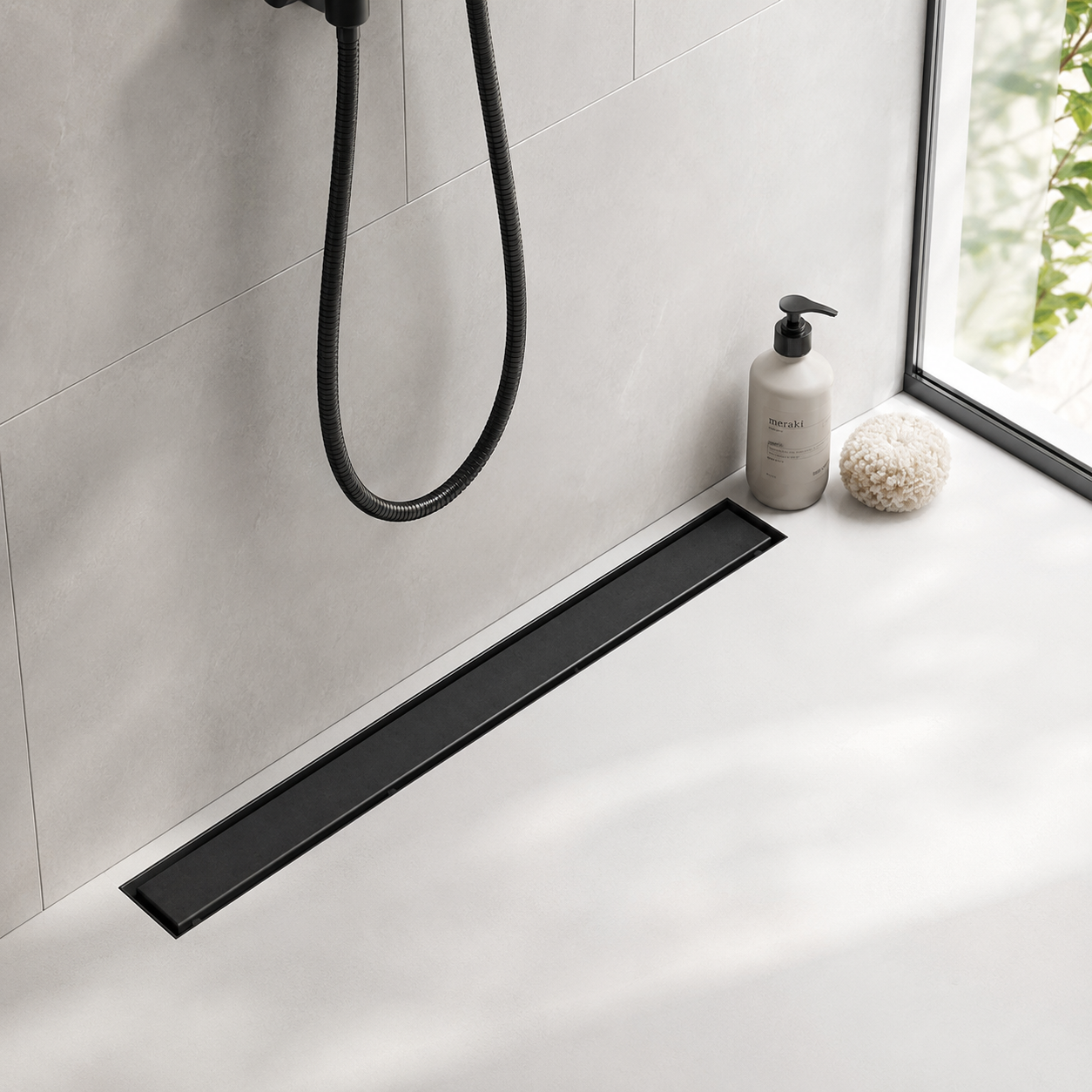
- Against the back wall: the most popular choice. The floor slopes gently away from the entrance, so the drain nearly disappears and the tile flows in cleanly from the bathroom.
- Across the entrance (threshold line): useful when you want to keep any splash contained to the shower zone in a fully open, doorless layout.
- Along one side wall: handy in narrow ensuites where a single-slope floor is easiest to build against the longest run.
Our 24-inch Linear Shower Drain is built for exactly this kind of install. It ships with a 2-in-1 reversible cover: run the matte-black flat side for a crisp, minimalist channel, or flip it to the tileable insert and drop in a cut piece of your floor tile so the drain blends in almost completely. Both options are 100% metal, so unlike plastic channels they won't flex, warp, or discolour in a hot, humid shower over time.
Tile, slope and safety details that matter
Curbless does not mean water goes wherever it likes. A few build details keep everything dry and comfortable:
- Get the slope right. Aim for roughly a quarter inch of fall per foot toward the channel. Too flat and water pools; too steep and the floor feels off underfoot.
- Choose slip-resistant tile. Textured porcelain, honed natural stone, or smaller-format tile with more grout give better grip on a wet, level floor. Save the high-gloss tile for the walls.
- Plan the waterproofing. With no curb, the membrane has to extend well past the shower opening into the main floor. This is the step most worth slowing down for.
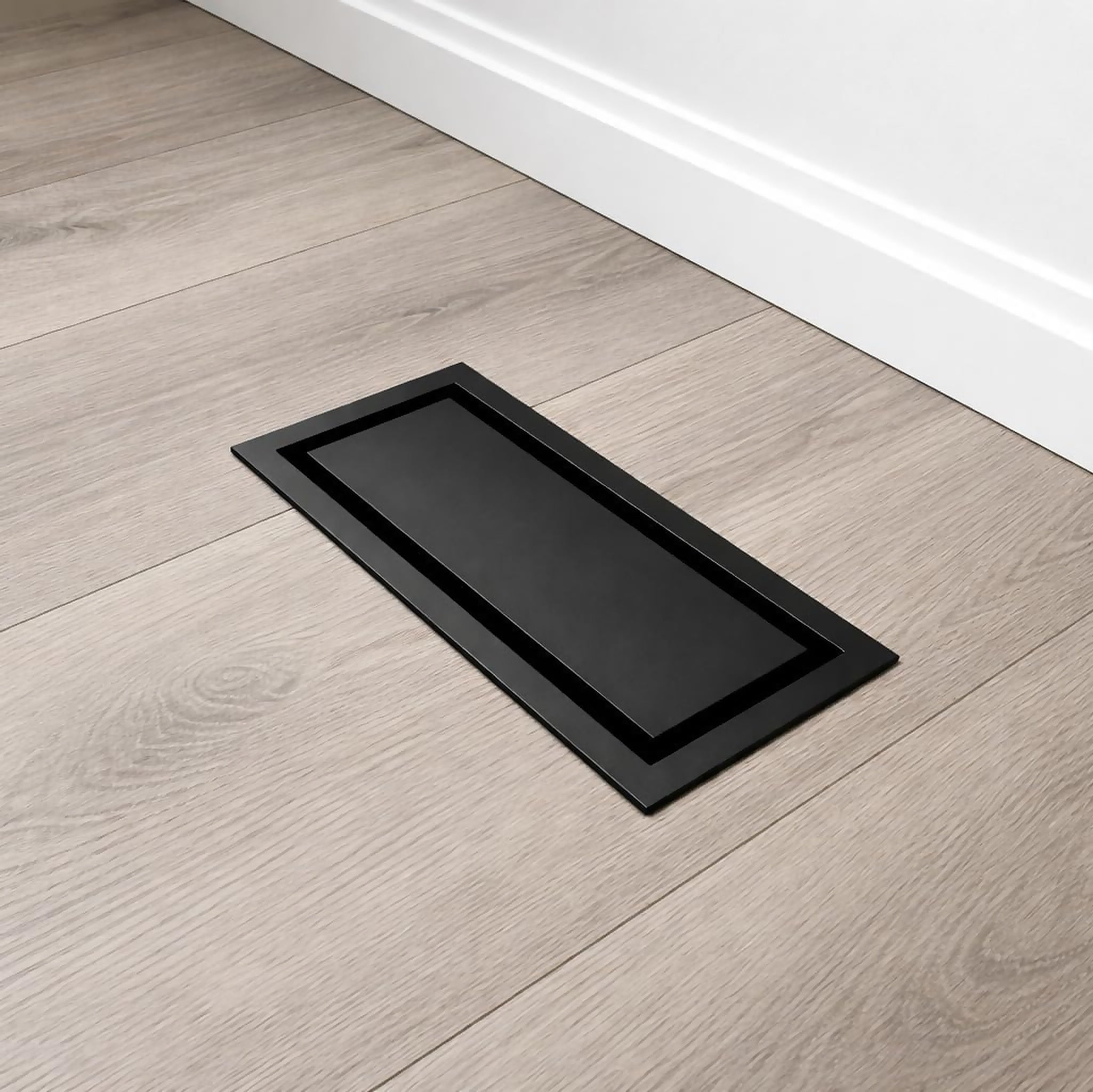
If you love that flush, built-in aesthetic in the shower, it's worth carrying the same idea through the rest of the room. The seamless approach we cover in our guide to hidden and flush floor vents pairs naturally with a curbless layout, and an undermount flush floor vent nearby keeps the same low-profile, disappears-into-the-floor look consistent from the shower to the vanity.
Is a curbless shower a good fit for a Canadian home?
For most renovations, yes. Barrier-free showers are a strong choice for aging in place, they suit the open, minimalist style trending in newer Canadian builds, and they make cleaning far easier with no lip to scrub around. The main requirement is planning the floor build and waterproofing before tile goes down, which is straightforward on a new build or a full bathroom gut, and very doable in a retrofit with the right subfloor recess.
Frequently Asked Questions
Do curbless showers leak onto the bathroom floor?
Not when they're built correctly. A properly sloped floor directs all the water to the linear drain, and a waterproof membrane that extends past the opening handles any stray splash. Getting the slope and membrane right is what keeps the rest of the bathroom dry.
What size linear drain do I need?
A 24-inch channel suits most standard walk-in showers and single-slope layouts. As a general rule, the drain should span a good portion of the shower's width so it can keep up with the flow from your showerhead without pooling.
Can I match the drain to my floor tile?
Yes. Our Linear Shower Drain includes a reversible cover with a tileable insert, so you can set a piece of your own tile into the channel and let it blend into the floor. Prefer a defined line instead? Flip it to the matte-black flat cover for a clean, modern accent.
Share:
Hidden Floor Vents Compared: Drop-In, Undermount or Insert
Supply vs Return Vents: Which Register Do You Need?