Before you buy a replacement cover, you need to know which kind of opening you are dealing with. Supply vs return vents is not just trivia — the two take different covers, in different sizes, and getting it backwards leaves you with a grille that rattles, chokes airflow, or will not sit flat. This guide sorts out which opening is which in about thirty seconds, then walks through exactly what to order for each.
Supply or return: the thirty-second test
A supply vent is the delivery end of your system. Conditioned air, warmed by the furnace in winter or cooled by the AC in summer, travels through the ductwork and pushes out into your rooms. Supply vents are usually smaller and sit in the floor, low on a wall, or in the ceiling near exterior walls and windows where the temperature swing is greatest.
A return vent does the reverse. It pulls room air back into the system to be reheated, cooled and filtered. Because a return has to move a large volume of air, it is almost always noticeably bigger, and you will not feel any air blowing out of it. Most homes have far fewer returns than supplies — sometimes just one or two central grilles.
Three checks settle it without any tools:
- The tissue test. Hold a sheet of tissue in front of the vent while the system runs. Blown away means supply. Pulled toward the grille means return.
- Feel for airflow. Supply vents push out air that is warmer or cooler than the room. Returns feel neutral because they only draw air in.
- Look at size and location. Returns tend to be large grilles set into walls or ceilings; supplies are the smaller, more numerous registers spread around the room, often in the floor.
What to order for a supply opening
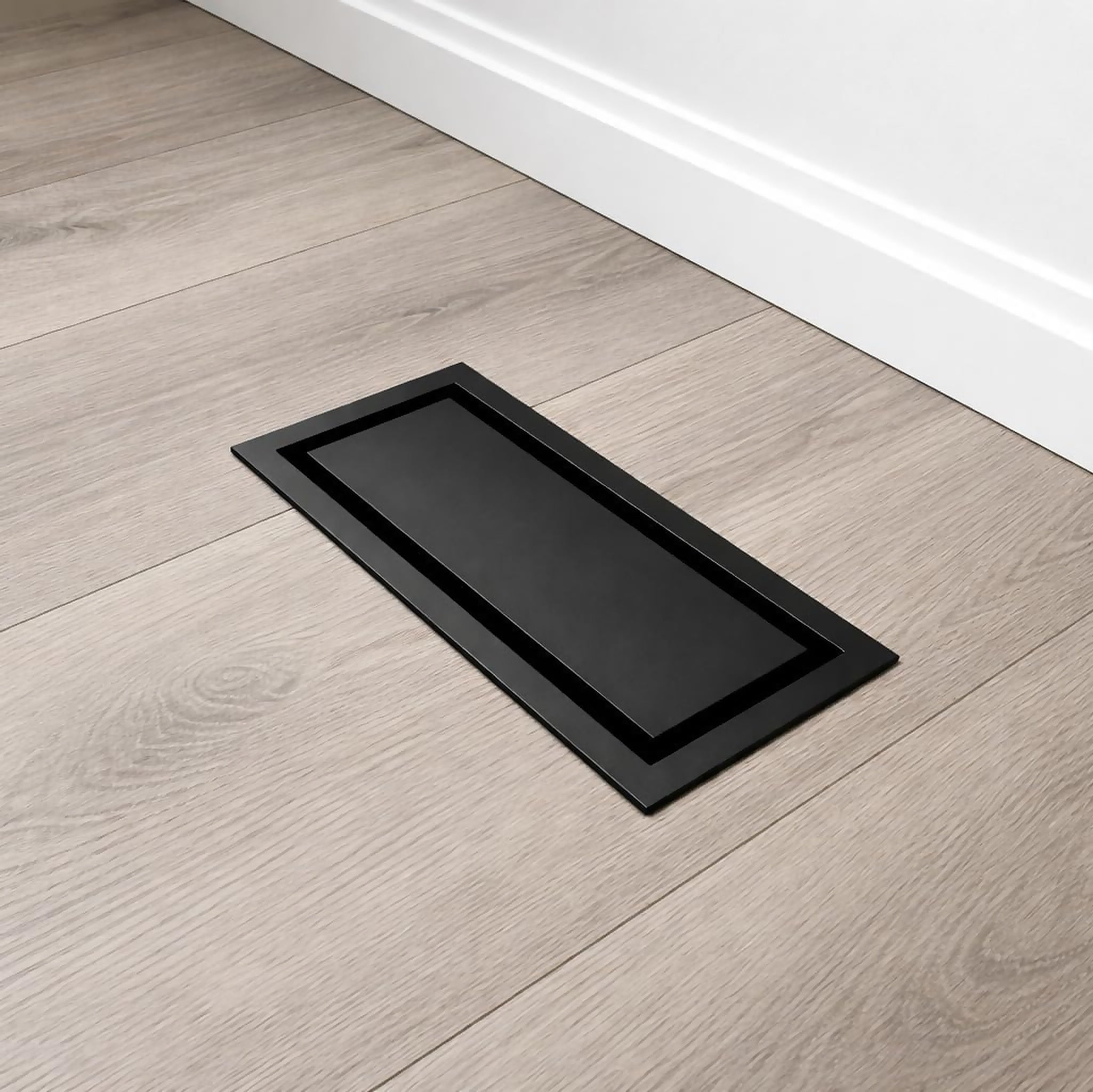
In most Canadian houses supply vents live in the floor along outside walls, which is why floor registers take a beating from foot traffic, dust and the occasional dropped toy. An all-metal register like our Drop-In Floor Vent holds up to that abuse far better than flimsy plastic that warps and cracks over a few heating seasons, and its click-in compression fit means no screws and no visible frame. Our comparison of metal vs plastic vent covers explains exactly how the two materials age and which styles are a straight swap.
If you want the register to disappear into the floor rather than sit on top of it, two routes work. The Upgraded 2-in-1 Drop In Vent ships with a floor-matching insert so you can drop in a cut piece of your own flooring, and if you already own drop-in vents you can add the look later with our Drop-In Vent Inserts 4-Pack in 3x10 or 4x10. Our buyer's guide to floor registers with flooring inserts covers which route suits which floor. Browse the full range in our floor vents collection.
What to order for a return or exhaust opening
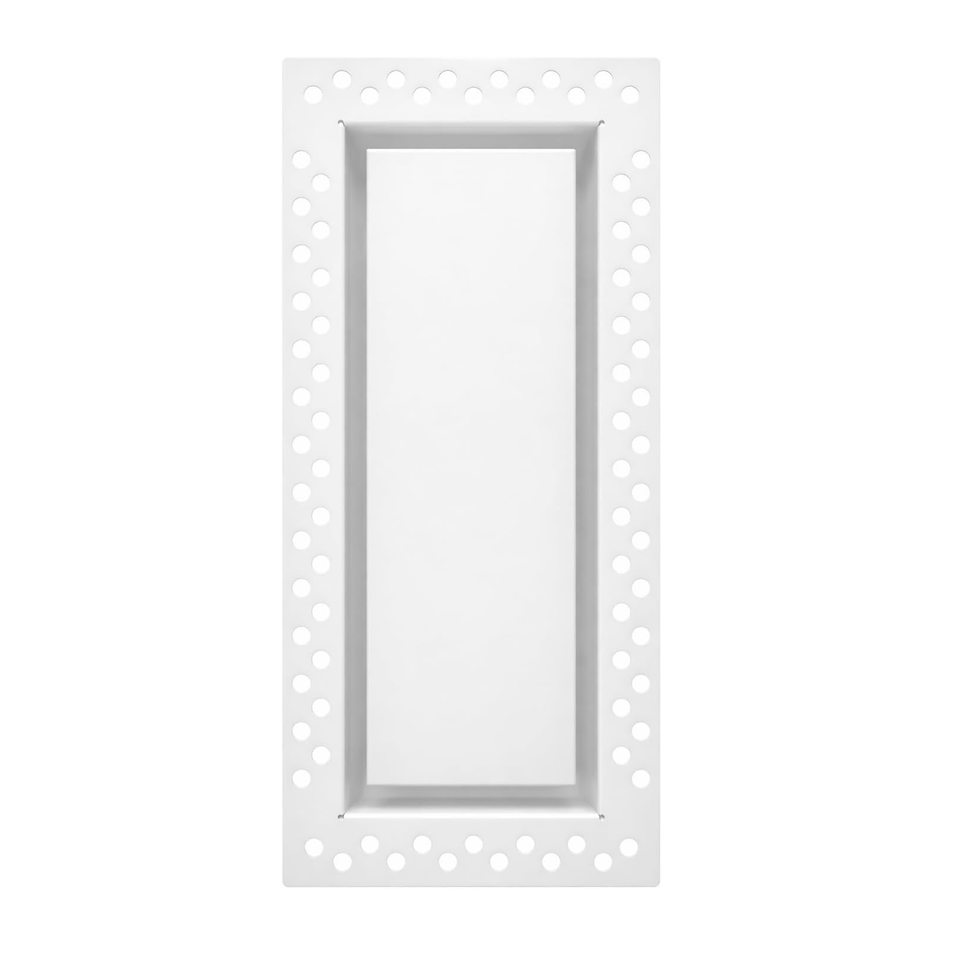
Returns are usually mounted on walls or ceilings, where a wider grille can be tucked in without becoming a tripping hazard. Because a return has no damper to close, what matters is open area and a clean fit against the drywall. A Flush Wall Vent is built for the job, with sizes running up to 8x14.25 and 10x30.25, plus a 14x14 exhaust-fan mount for bathroom fans. If you prefer a defined border and a tool-free surface mount, the Framed Wall Vent covers openings from 3x10 up to 8x14.
Not sure which style suits the room? Our flush vs framed wall vent comparison breaks down the trade-offs, and our guide to wall vent cover sizes for returns and exhausts walks through picking a size for a larger opening. Shop flush wall vents for a seamless mud-in finish or framed wall vents for a surface mount — both all-metal, with free shipping across Canada and a 2-year warranty.
Measure the duct opening, not the old cover
This is where most replacement orders go wrong. Vents are sized by the duct opening they fit into, not by the outside dimensions of the cover currently sitting over it. A 4x10 register describes a 4 by 10 inch hole; the visible faceplate is larger. Measure the hole itself, width first, and order to that number. Our guide on how to measure floor vents for the right size fit walks through the exact numbers, and if you have already ended up with something loose or tight, our fix for vents that do not fit properly covers the salvage options. If this is part of a larger renovation rather than a straight swap, our guide to floor vent install timing, before or after flooring explains which styles have to be on site before the flooring crew arrives.
Keeping the loop balanced through a Canadian winter
When returns are blocked by furniture, or a room is closed off from its return path, the system struggles to pull air back. That shows up as cold spots, whistling doors and a furnace running longer than it should — nobody wants that when it is well below zero outside. Keep supply registers open and returns clear so the system can breathe, and choose metal grilles that will not sag or restrict airflow the way brittle plastic can. Our measured test data on whether flush floor vents restrict airflow shows exactly what changes between styles — static pressure, blower watts and CFM — before you commit to a look. Seasonal cleaning of your metal floor vents keeps that airflow where it should be. The entryway is the toughest test of all — our guide to choosing mudroom floor vents for Canadian winters covers which style handles salt, slush and boot traffic.
Frequently Asked Questions
Can I use the same register for a supply and a return?
Physically the grille may fit either opening, but returns need a larger free area to move enough air, and unlike a supply register they do not need an adjustable damper. Match the cover to the duct opening and size the return for the room it serves rather than reusing a small supply register.
What size vent cover should I order for a return?
Measure the duct opening, not the existing faceplate, and order that size. Returns are typically the largest openings in the house, so plan on a wall vent in the 8x14.25 or 10x30.25 range rather than a standard floor register size.
Should I close vents in unused rooms to save on heating?
Closing one or two supply registers is usually fine, but shutting off whole zones raises duct pressure and makes the system work harder. It tends to backfire on both comfort and your energy bill.
Related guides
- Metal vs plastic vent covers: which should you buy?
- How to measure floor vents for the right size fit
- Floor vent install timing: before or after flooring?
- Do flush floor vents restrict airflow? Real test data
- Wall vent cover sizes: fitting returns and exhausts
- Drop-in vs undermount floor vents: what's the difference?
- Flush vs framed wall vents: which is right for your home?
- Mudroom floor vents: best picks for Canadian winters
Share:
Curbless Shower Design: Linear Drains for Modern Baths
Floor Vents for Vinyl Plank (LVP) Flooring: A Guide