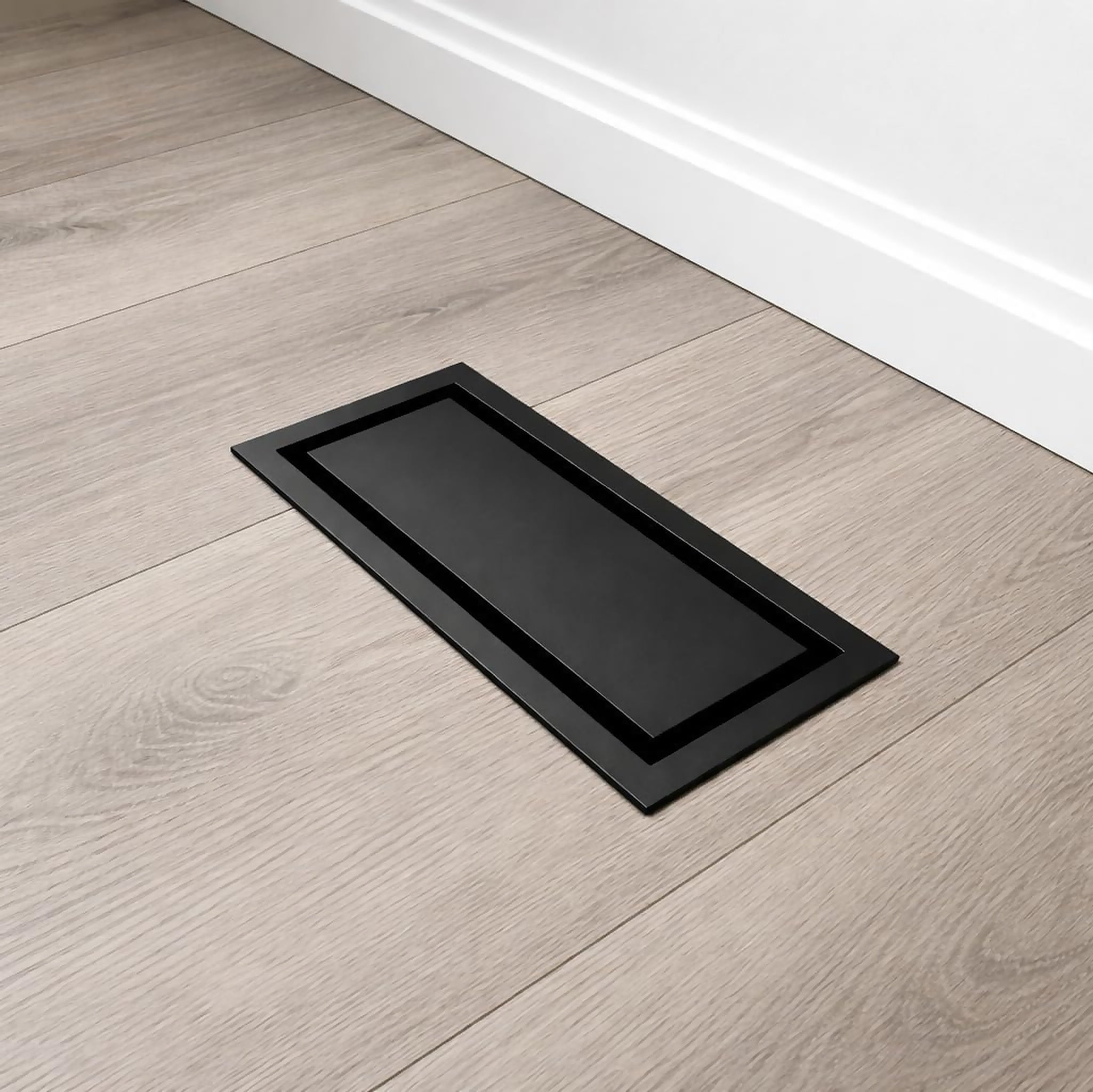
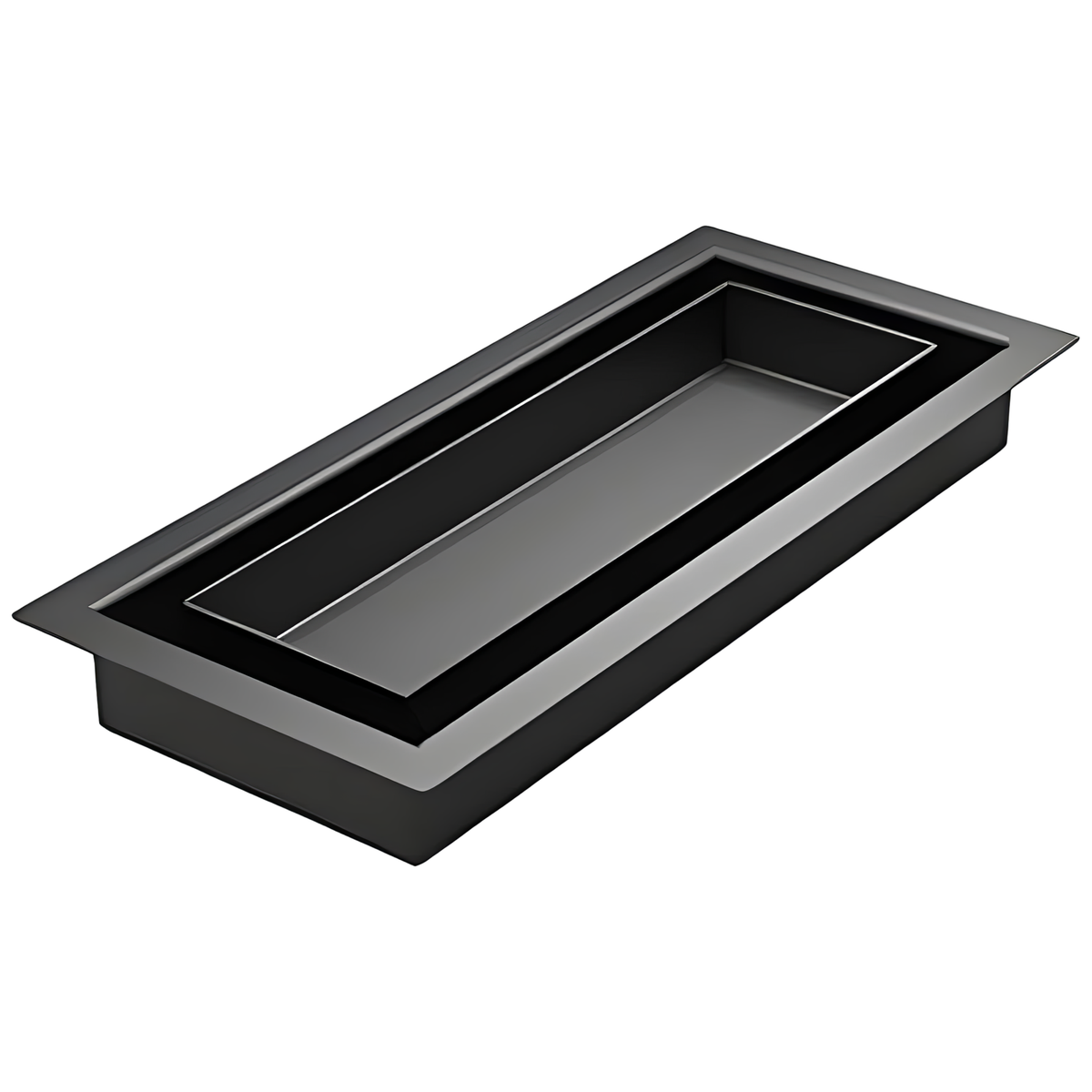
The 3x10 vs 4x10 floor vents question comes up the moment you pull an old register off the floor and realise the label on the back means nothing. Both sizes share the same 10-inch length, so they look nearly identical in a photo — but a 3x10 will rattle around in a 4-inch duct opening, and a 4x10 simply will not drop into a 3-inch one. Here is how to settle it in about two minutes with a tape measure.
Measure the duct opening, not the old vent cover
Vent sizes in Canada are named after the duct opening, not the outside dimensions of the cover. A 4x10 register sits over a rough opening that measures roughly 4 inches by 10 inches; the visible faceplate is larger, usually by about an inch and a half in each direction. That is why measuring the old cover gives you the wrong answer almost every time.
Lift the existing register out, drop your tape into the bare hole, and record the short side first. If you get 3 to 3.25 inches across, you need a 3x10. If you get 4 to 4.25 inches, you need a 4x10. Anything closer to 12 inches on the long side means you are in 4x12 territory. Our step-by-step walkthrough on how to measure floor vents for the right size fit covers the edge cases, including openings cut slightly out of square.
Which rooms usually take which size
There is no rule that a house uses one size throughout, and most do not. In practice:
- 3x10 — common in bedrooms, hallways, upper-floor rooms, and anywhere the branch duct runs between standard 16-inch-on-centre joists with limited depth.
- 4x10 — the workhorse size for main-floor living rooms, dining rooms, and kitchens, where the branch carries more air.
- 4x12 — used for larger supply runs and open-concept spaces that need more throughput from a single outlet.
Walk the house and write down each opening before you order. Buying a mixed set in one go is cheaper than a second shipping trip, and our Drop-In Floor Vent [Metal] comes in all three sizes from $29.69 CAD, with 5-packs available if you are doing a whole floor at once.
What if you fall between sizes?
Older Canadian homes, especially anything renovated more than once, throw up openings that measure 3.5 inches or a hole that has been chewed out at one corner. Two things matter here. First, a compression-fit vent has more tolerance than a screw-down one — the drop-in and flush floor vents in our range click into the duct and hold themselves, so a slightly ragged edge does not show.
Second, size down rather than up when you are genuinely between two sizes. A 3x10 in a 3.5-inch hole can be shimmed or sealed; a 4x10 that will not seat leaves you with a cut-in job. If you have already ordered and something is not sitting right, our guide on what to do when a floor vent doesn't fit — loose, tight or rattling walks through the fixes.
Does the size change which vent style you can use?
All three sizes are available in both of our main floor styles, but the decision is different. A drop-in vent sits in the finished opening and can be installed at any point — including years after the floor went down. An Undermount Flush Floor Vent [Metal], from $54.99 CAD, installs into the subfloor so the cover finishes completely flush with the floor surface, which means the size has to be confirmed before flooring goes in. Miss that window and the drop-in is your practical option.
If you want the flush look without cutting into the subfloor, the Upgraded 2-in-1 Drop In Vent with Insert (from $37.99 CAD) ships with a matching insert so you can fill the face with a piece of your own flooring. The style comparison in our framed vs undermount floor vents guide lays out the trade-offs in full.
A note on metal versus plastic at these sizes
The smaller the opening, the more a warped cover shows. Plastic registers sitting over a hot supply run bow at the long edge, and on a 3x10 that bow is a bigger share of the face. Every Khan Supply CO vent is 100% metal, so it holds its shape over a heat run, carries a 2-year warranty, and ships free across Canada.
Frequently Asked Questions
Can I put a 4x10 vent in a 3x10 opening?
No. The 4x10 body will not seat in a 3-inch duct, and forcing it damages both the duct and the vent. Measure the bare opening and order to match.
Do I measure the hole or the vent I already have?
Always the hole. Vent sizes describe the duct opening, and the faceplate you see is roughly an inch and a half larger in each direction.
Does a 3x10 move less air than a 4x10?
A smaller opening does carry less air, but it is matched to a smaller branch duct, so swapping in a larger cover will not increase airflow. The cover style makes more difference than the size — our drop-in design delivers up to 60% more airflow versus comparable flush vents.
Share:
Floor Vent Inserts: Metal Panel or Flooring Inlay?
Mudroom Floor Vents: Best Picks for Canadian Winters