
Choosing finished basement vents is one of those details that separates a professional-looking reno from an obvious DIY job. Basements are hard on builder-grade hardware: registers get kicked, knocked by furniture, and asked to move a lot of air through a handful of openings. Below-grade rooms in Canadian homes also swing from damp summers to hard-working heating season, so the covers you choose need to handle real life, not just look good on day one. Here is how to decide what goes in the floor, what goes in the wall, and which style suits each spot.
Wall vents first: flush or framed?
Most basement supply runs and cold-air returns land in walls or bulkheads, so this is the decision that shapes the whole look. A framed wall vent (from $37.99) mounts over finished drywall with a clean visible border — the practical pick when the opening is already cut and painted, because it covers minor drywall sins around the hole. A flush wall vent (from $34.19) is set into the drywall and mudded in, so the face sits perfectly flat with the wall — the minimalist look that makes a basement feel like a custom build rather than an afterthought.
The rule of thumb: if you are hanging new drywall anyway — which describes most basement finishes — flush is worth the small extra install step. If you are upgrading an already-finished basement, framed goes on in minutes. For the full breakdown, see our guide to choosing between flush and framed wall vents, or browse the complete wall vent collection to compare sizes and styles.
Getting return air right in a basement
Returns are where basement finishes most often go wrong. Return openings are typically larger than supplies, and a cover that chokes them makes the whole space stuffy. Khan Supply CO wall vents run well past standard register sizes — the framed style goes up to 8x14 ($64.99), and the flush style is available up to 8x14.25 and even 10x30.25 for large central returns. If you are not sure which openings are which before ordering, our short guide on telling supply and return vents apart sorts it out in a minute.
One sizing rule saves nearly every headache: measure the duct opening, not the old cover. A listed size like 4x10 refers to the opening in inches. Our vent measuring guide shows exactly where to run the tape.
Floor vents that survive basement life
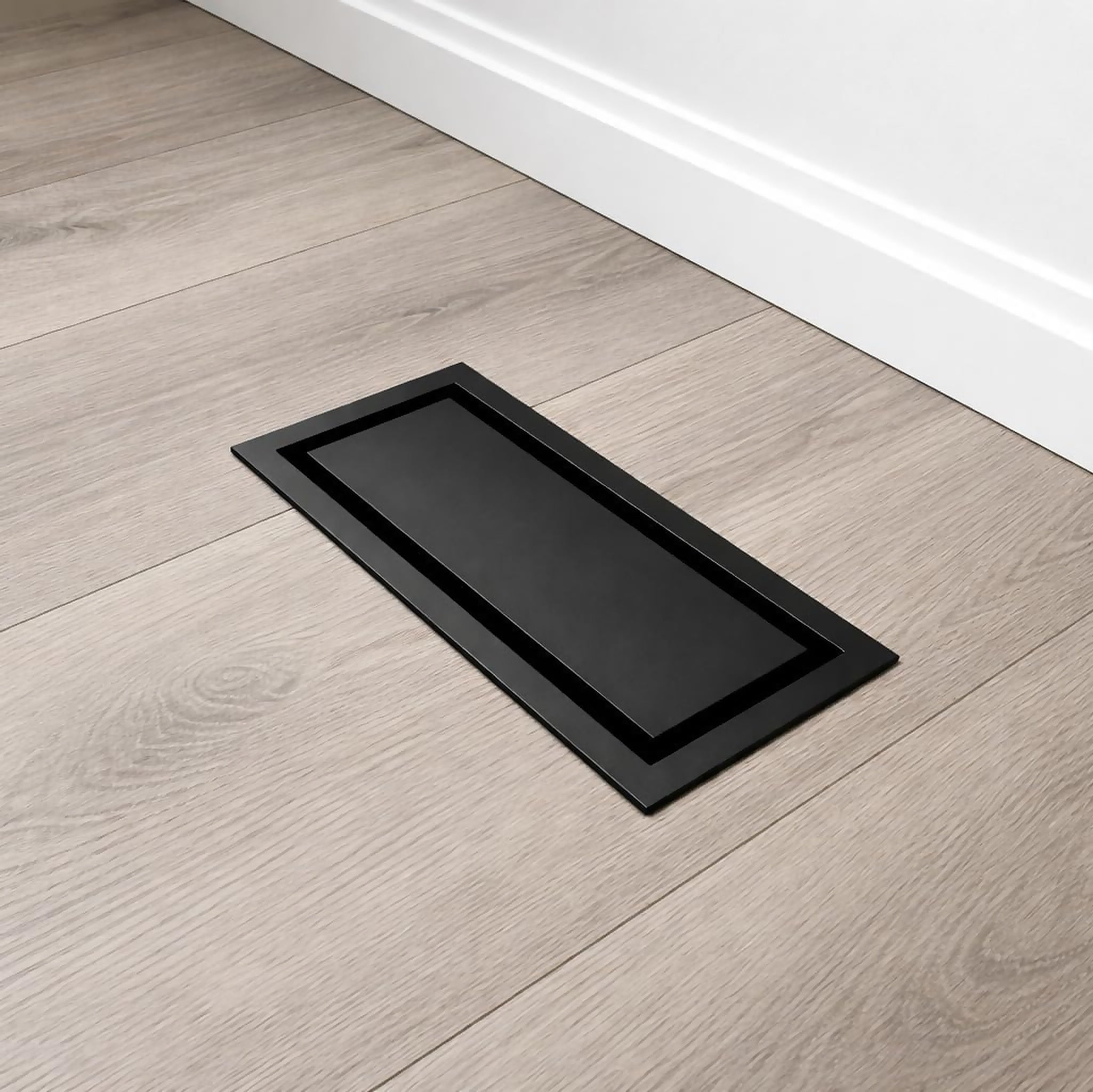
Where ductwork comes up through the floor — stair landings, raised subfloor systems, or furnace-room perimeters — a drop-in metal floor vent (from $33.99) is the workhorse choice. The click-in compression fit means no screws through your new flooring, and in our own testing the open design moves up to 60% more air than comparable flush vents — useful in a basement, where every supply counts. Because it is 100% metal, it will not crack underfoot or warp the way standard plastic registers do near heat runs. Laying vinyl plank down there? Our guide to floor vents for LVP flooring covers the fit details.
Cold-climate details worth sweating
Basements in Canada see condensation in July and constant airflow in January. All-metal covers shrug off both, and every vent ships free with a 2-year warranty from a proudly Canadian-owned shop — so matching black hardware across the whole basement does not require mixing suppliers. Adding a bathroom to the finish? Start with our basement bathroom reno guide for the layout and fixture decisions that pair with these vents.
Frequently Asked Questions
Should basement vents go in the floor or the wall?
Follow the ductwork: most basement finishes put both supplies and returns in walls or bulkheads, with floor vents only where a duct already terminates in the floor. Both Khan Supply CO styles come in matching matte black, so mixing placements still looks coordinated.
What size vent do I need for a basement return?
Measure the inside of the duct opening in inches and order that listed size — returns commonly run 8x14 up to 10x30. Never match against the old cover's outer face, which is always larger than the opening.
Are metal vents better than plastic in a basement?
Yes — a 100% metal vent will not warp or melt like plastic near heat sources, and it stands up to the knocks and furniture traffic basements take, which is why all Khan Supply CO vents are all-metal with a 2-year warranty.
Share:
How to Install an Undermount Floor Vent (Subfloor Guide)
Standard Vent Cover Sizes: Wall Vent Sizing Chart