Mudroom floor vents take more abuse than any other register in a Canadian home. From November through April they sit directly under melting boots, road salt, sand and slush, and they get stepped on every day by someone carrying groceries. Choosing an entryway vent is less about looks than about which style survives the season, sheds grit instead of trapping it, and still lifts out cleanly when you need to rinse it.
What a Canadian Entryway Does to a Vent
Three things go wrong in mudrooms, and all of them get worse the colder it is outside:
- Constant moisture. Snow melts off boots and runs through the slots into the duct. Salt residue holds moisture and keeps the surface damp long after the puddle has dried.
- Grit falling through. Sand and de-icing pellets drop through the openings and settle in the duct boot, so an entryway vent has to come out easily for cleaning.
- Foot traffic. This is the one room where people routinely step on the register in heavy winter boots.
That last point is what rules out standard plastic registers for most entryways. Plastic flexes underfoot, and once it has cracked at a corner it rattles for the rest of its life. Every vent we make is 100% metal, so it will not warp, melt or crack the way a plastic register can, and it is backed by a 2-year warranty.
Which Vent Style Suits a Mudroom Floor
All three of our floor vent styles will work in an entryway, but they behave differently under winter conditions.
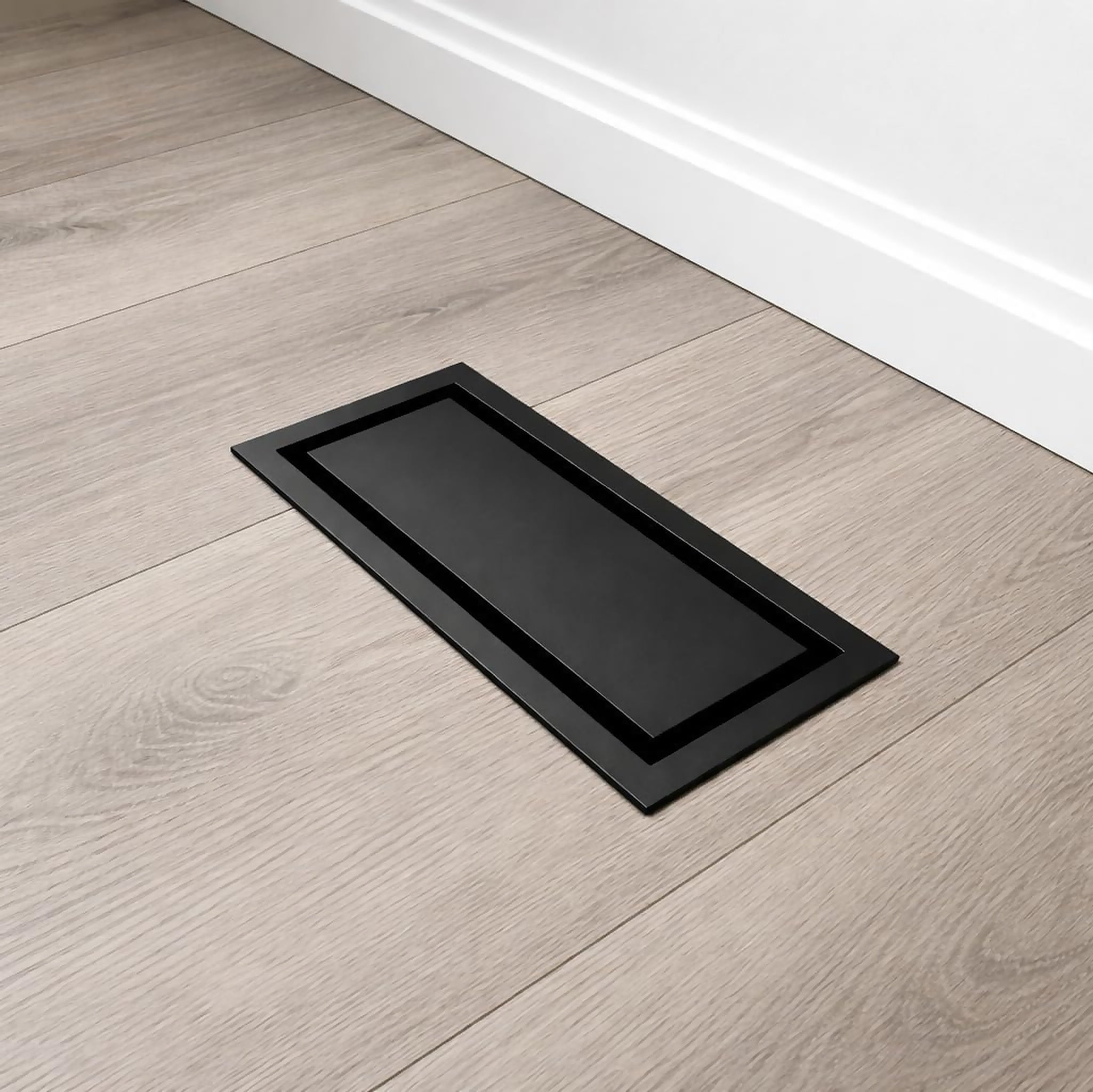
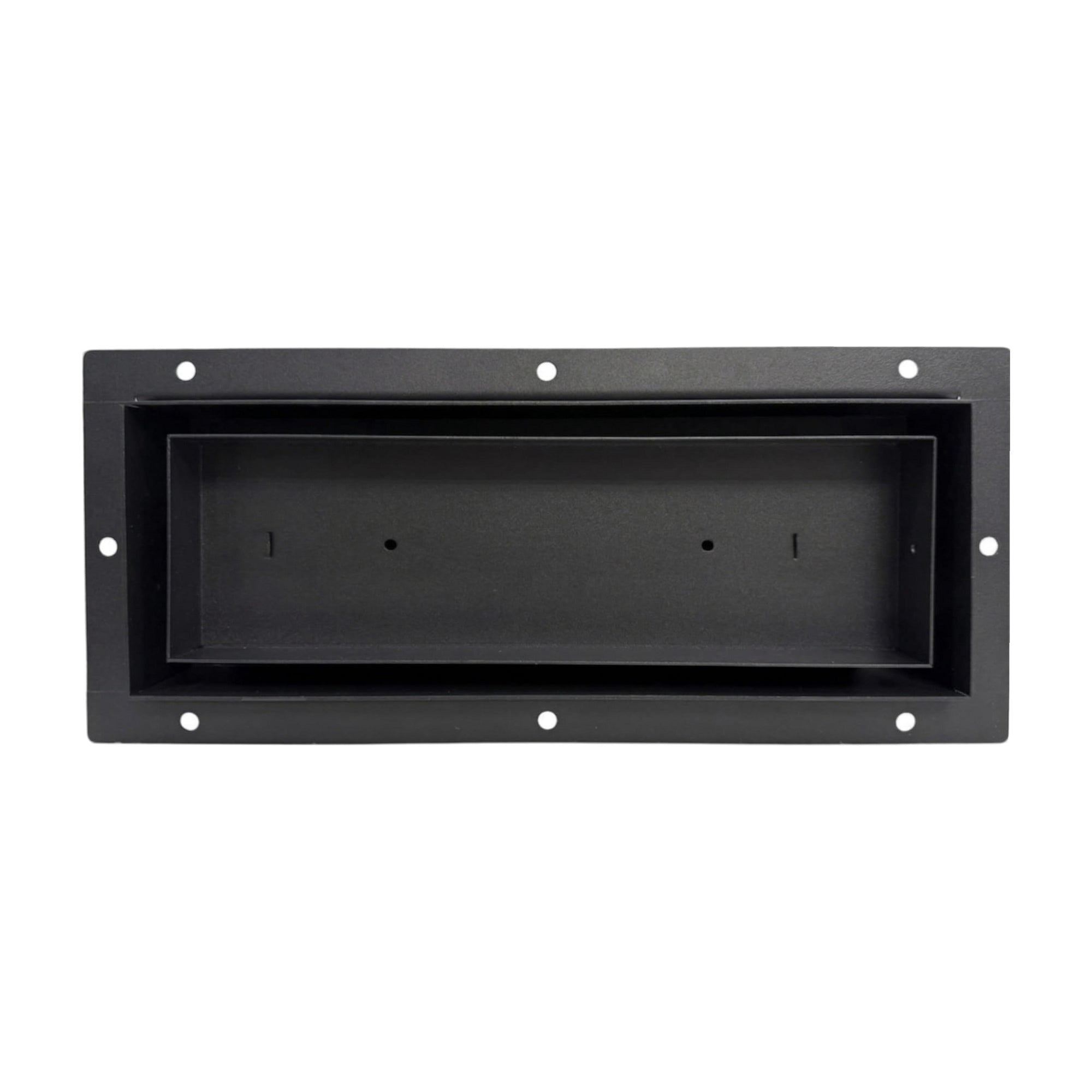
- Undermount flush. The Undermount Flush Floor Vent (from $54.99) installs into the subfloor so the face sits completely flush with the finished floor. Nothing proud of the surface means nothing for a boot toe or a broom to catch, and mud sweeps straight across it. It is the cleanest-looking option and the best choice if the entryway floor is not down yet.
- Drop-in. Our best-selling Drop-In Floor Vent (from $29.69) clicks into an existing opening with a compression fit, so it is the practical retrofit for a mudroom that is already finished. Its open design also delivers up to 60% more airflow than comparable flush vents, which matters in a cold room that gets a blast of outside air every time the door opens.
- Drop-in with insert. The Upgraded 2-in-1 Drop In Vent with Insert (from $37.99) lets you fill the centre panel with a piece of your own flooring so the vent nearly disappears. Lovely in a tiled entry, though the inlay is one more surface to wipe salt off.
If you are torn between the recessed and click-in approaches generally, our breakdown of framed versus undermount floor vents walks through the install differences in detail.
Matching the Vent to Your Entryway Flooring
Most Canadian mudrooms are finished in porcelain tile, luxury vinyl plank or sealed concrete, because all three shrug off water better than hardwood does.
On tile, the depth of your thinset and tile stack determines whether an undermount can sit truly flush, so measure the full build-up before ordering. Our guide to floor vents for tile floors covers that measurement. On LVP, the floating floor needs an expansion gap around the vent opening, which our vinyl plank floor vent guide explains. On sealed concrete in a slab-on-grade entry, a drop-in vent is usually the only sensible route since there is no subfloor to recess into.
What Size Mudroom Vent Do You Need
Entryway ducts in Canadian builds are most often 3x10 or 4x10, with 4x12 turning up in newer homes near an exterior wall. Measure the duct opening itself, not the old cover, then order to that number. If you land between sizes, our comparison of 3x10 versus 4x10 floor vents explains which way to go. You can see the full range of sizes and styles in the floor vents collection.
When the Vent Belongs in the Wall Instead
Mudrooms are tight rooms, and a bench, boot tray or cabinet run often lands right on top of the floor register. If that is your layout, moving supply or return to the wall is the better answer. A Framed Wall Vent (from $37.99) drops into existing drywall with a visible trim edge that hides a rough cut, while a flush wall vent gives a seamless painted-in look on a new build. Our comparison of flush versus framed wall vents covers which suits which situation.
Frequently Asked Questions
Can a floor vent handle salt and water in a mudroom?
Metal handles the physical abuse far better than plastic, but no vent enjoys sitting in salt residue. Lift the cover out every few weeks through winter and wipe the face and the duct boot dry, following our guide to cleaning metal floor vents.
Should I close the mudroom vent in winter?
Generally no. Closing registers in an unheated-feeling room can raise duct pressure elsewhere in the system, and a mudroom that gets a blast of outside air at every door opening is the room that benefits most from steady supply air.
Can I install an undermount vent in a finished entryway?
Only by cutting into the finished floor, so undermount really belongs in a renovation where the entryway floor is coming up anyway. For a mudroom that is already done, a drop-in vent gives you the upgrade without touching the flooring.
Share:
3x10 vs 4x10 Floor Vents: Which Size Do You Need?
Floor Vent Install Timing: Before or After Flooring?